Is Getting Paid to Post a Scam? The Warning Signs to Check Before You Pay
Is getting paid to post a scam?
Not always, but many offers that promise it are. "Get paid to post" is legitimate only when the terms are clear, the income is never guaranteed, and a real refund route exists. It becomes a scam when it demands upfront fees, promises fixed daily earnings, or leans on fabricated testimonials. Judge every offer against those signs.
- Legitimate signs: clear terms, a real refund path, and no income guarantee.
- Scam signs: upfront fees, guaranteed daily payouts, and fake or AI testimonials.
- CashScroller is a tool sold once with a 60-day ClickBank refund and no earnings promise.
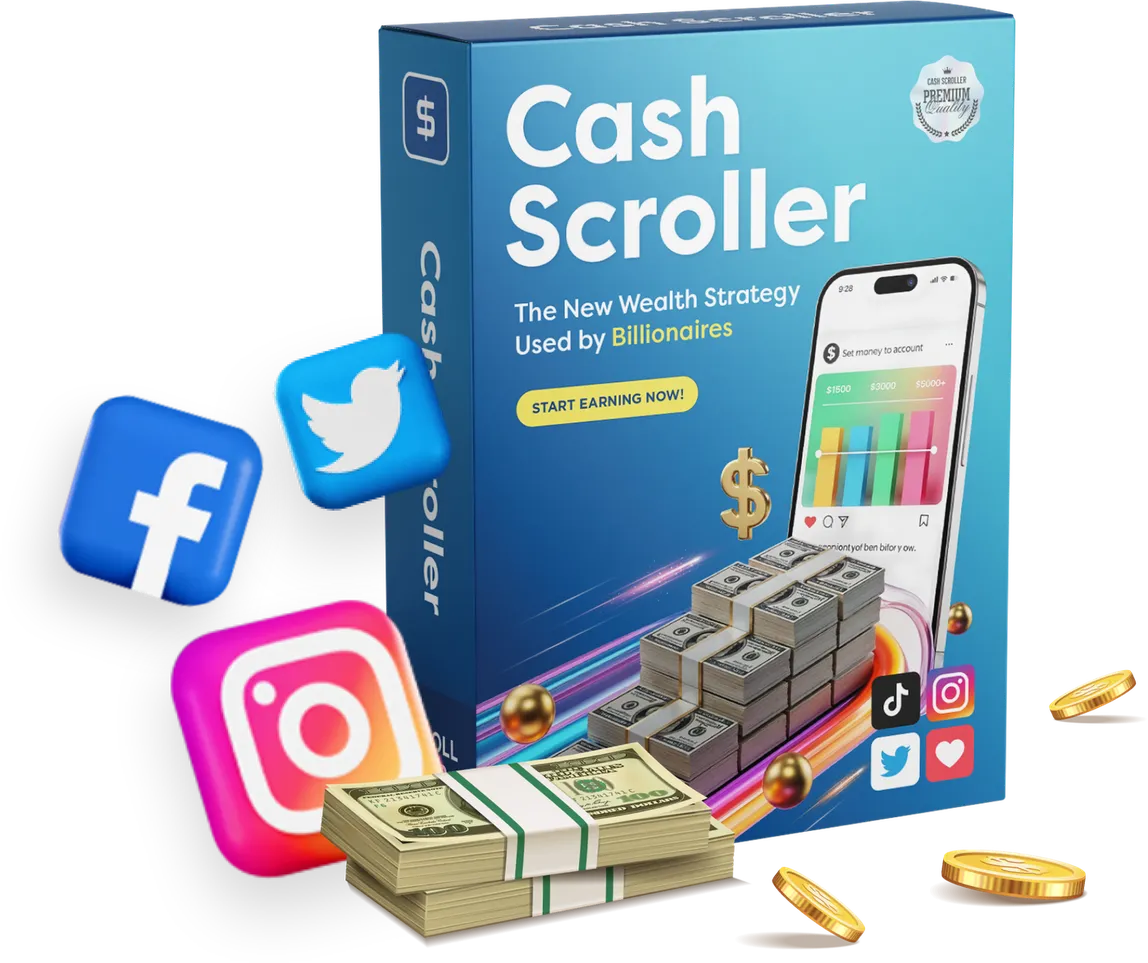
Somewhere between "make money in your sleep" and "this one weird trick", the phrase get paid to post has become one of the most abused promises on the internet. So the question is fair, and you are right to ask it before you spend anything: is getting paid to post a scam? The honest answer is that it depends entirely on the offer in front of you. Some post-for-pay pitches are outright cons engineered to take your money and vanish. Others are ordinary software tools that quietly do a real job and never promise you a payday at all. The trouble is that both use the same language, so the words alone tell you nothing. What tells you everything is the structure behind the words.
This article gives you that structure: a short, practical checklist you can run against any offer in about two minutes. We will name the red flags that should stop you cold, the legitimate signs that suggest an offer is playing straight, and — because we publish about one specific tool — exactly where CashScroller lands when you hold it up to the same light. No hype, no scare tactics, and no pretending that a tool is a paycheck. Just the signs to check.
Is getting paid to post a scam, or something the internet just abuses?
Let us untangle two things that the phrase deliberately blurs. "Getting paid to post" can describe a genuine activity — brands do pay creators, affiliates do earn commissions, and businesses do publish content that eventually sells something. None of that is fraudulent. What is fraudulent is the packaging: the version that promises you a fixed sum for pressing a button, wraps it in fake screenshots of overflowing bank balances, and asks for a fee to "activate" your account first. So when you ask whether getting paid to post is a scam, the sharper question is this: is this particular offer honest about how the money actually works?
Real income from posting, when it happens at all, comes from a few unglamorous routes: selling your own product, earning commission on someone else's, or being hired for the audience you have built. Every one of those requires an audience, an offer people genuinely want, and time. A scam's entire job is to hide that reality and replace it with a shortcut that does not exist. Keep that distinction in your head and half the cons collapse on contact, because the moment an offer skips over "how" and jumps straight to "how much", it has told you what it is.
The scam checklist: red flags that should stop you cold
You do not need to be an expert to spot a con. You need a checklist and the discipline to actually use it before your enthusiasm gets ahead of you. Here are the signals that, in our experience covering this category, reliably separate a con from a product. Any single one is a reason to slow down. Two or more of them together, and you should simply close the tab.
1. It guarantees income — especially a daily figure
This is the loudest alarm of all. No legitimate business can guarantee what you will earn, because your earnings depend on things no seller controls: what you post, who follows you, and whether anyone acts on it. When a page promises "$300 a day, guaranteed" or "earn while you sleep", it is not being generous — it is making a claim the law requires it to be able to prove. Under the FTC's rules, any earnings claim must be backed by real substantiation, and cons never have it. A guaranteed daily figure is not a selling point; it is the single clearest sign you are being lied to.
2. It charges an upfront fee to "unlock" the earning
Watch the direction the money flows. In a legitimate arrangement you might buy a tool once, but you are never asked to pay a separate "activation", "membership" or "training" fee before you are allowed to start earning. The classic con structure is a low headline price followed by a wall of add-ons you must buy to "actually make it work". If earning requires paying more and more before any money comes back the other way, the earning was never the product. The fees were.
3. The testimonials look fabricated or AI-generated
Scroll the proof, don't just skim it. Con pages lean heavily on testimonials because social proof sells — but their testimonials tend to share tells: stock-photo faces, names with no traceable presence online, screenshots of earnings with no verifiable source, and lately, review text and even video with the smooth, slightly hollow quality of AI generation. A genuine review can be checked; a fabricated one evaporates the moment you look for the person behind it. If every glowing quote leads nowhere, treat all of them as decoration rather than evidence.
4. Fake urgency, and nowhere to get your money back
Two smaller flags that almost always travel together. First, manufactured urgency: countdown timers that reset when you reload the page, "only 3 spots left" that never actually runs out, prices that "double at midnight" every single night. Real scarcity does not need to lie. Second, and more important, the absence of a real refund route. A con does not want to give money back, so it either hides its refund policy, buries it in unreachable terms, or routes payment through a method with no recourse. If you cannot find a clear, specific way to get a refund before you pay, assume there is not one.
Prefer to buy something that passes the checklist?
CashScroller is a browser-based posting tool sold as a one-time purchase with a 60-day money-back guarantee through ClickBank. No activation fees, no guaranteed-income promise — just software you can return if it is not for you.
See the Current CashScroller OfferOne-time payment · instant digital access · no income claim is made
The legitimate signs: what an honest offer actually looks like
Flip every red flag and you get the profile of an offer that is at least playing straight. It will not tell you everything you want to hear — honest offers rarely do — but it will hold up when you check it. Here is what to look for on the other side of the ledger.
- Clear, findable terms. The price, what you get, and the refund policy are stated plainly, not hidden behind a maze of pop-ups. You should be able to read them before you pay, not discover them afterwards.
- A real, specific refund route. Not a vague "satisfaction guaranteed" badge, but a named process with a time limit — for example, a 60-day money-back guarantee handled by a known payment processor you can actually contact.
- No income guarantee. This one feels backwards, but it is the strongest positive sign of all. An honest seller of a tool tells you plainly that results depend on you, and refuses to promise a number. The absence of a guaranteed payout is the presence of honesty.
- It sells a tool or a service, not "a system that pays you". Legitimate offers are clear about what they are. A scheduler schedules posts. A course teaches. Neither pretends to be an income stream in a box.
Notice that none of these signs promise you will succeed. That is the point. The trustworthy version of "get paid to post" is not the one that promises the most — it is the one that is honest about how little it can promise. If you want the deeper version of that argument applied to this exact product, our companion piece on whether CashScroller actually works takes the same honest lens to the results question rather than the scam question.
Where CashScroller lands on the checklist
Because we publish about one specific tool, it would be dishonest to run this checklist and then dodge the obvious question. So here is CashScroller held against every item above, red flag and green flag alike.
Does it guarantee income? No. Nowhere on this site, or in the product's own materials, is there a promise of a daily figure or any earnings at all. In fact, our own disclosures state plainly that most people who buy tools in this category do not earn money from them. That is the opposite of the guaranteed-payout red flag — it is a seller declining to make the one claim a scam always makes.
Does it charge upfront fees to "unlock" earning? No. CashScroller is browser-based software sold as a one-time purchase. There is no separate activation fee standing between you and the feature you paid for, and no "you must buy this too or it won't work" wall waiting after checkout.
Is there a real refund route? Yes. It is sold through ClickBank with a 60-day money-back guarantee — a named processor, a specific window, and a refund path you can actually use if the tool is not for you. That is the single most concrete protection on this list, and it exists here before you pay a cent. If you want to know exactly what that cent buys, our breakdown of what CashScroller costs in 2026 lays out the price and the terms without the marketing gloss.
So is it a job? No — and this is the honest catch. CashScroller is a tool for composing and scheduling social media posts, not a paycheck and not a business opportunity with a predictable return. It can remove the grind of posting; it cannot decide what you post or whether anyone cares. Judged by the scam checklist it is not a scam. Judged as a "get rich" scheme it does not qualify, because it never claims to be one. Those are two different questions, and mixing them up is exactly how honest tools get unfairly branded and how dishonest ones get a free pass.
Three myths that trip up even cautious buyers
Myth 1: "If it costs money, it must be a scam"
Price is not proof of fraud. Almost every legitimate tool on earth costs money — that is how software gets built, hosted and maintained. The relevant question is never "is there a price?" but "is the price honest, is what I get clearly described, and can I get it back?" A cheap con is still a con; a fairly priced tool with a real refund policy is not a scam simply because it is not free. Judge the structure, not the sticker.
Myth 2: "If it's not a scam, then I'll definitely make money"
This is the mirror-image mistake, and it burns more people than outright fraud does. Concluding that an offer is legitimate does not mean it will make you money — it only means it is not lying to you. A scheduling tool being real and useful, and a scheduling tool making you an income, are two entirely separate outcomes. The first is about the product; the second is about you, your audience and your effort. Do not let "it's legit" quietly slide into "it'll pay off".
Myth 3: "Testimonials prove it works"
Testimonials, even genuine ones, describe one person's experience, not a typical result. The good ones tell you a thing is possible; none of them tell you it is probable for you. This is precisely why regulators treat unverified case studies with suspicion, and why we label any user account on this site as individual, non-typical, and published by the seller. Read testimonials as flavour, never as a forecast.
How to protect yourself when you buy anything online
Whatever you end up buying — this tool or any other — a few habits will keep you out of almost every trap. None of them are technical, and all of them take seconds.
- Pay with a card, never a wire or gift card. Cards carry chargeback rights; wires and gift cards are how scammers prefer to get paid precisely because that money cannot be clawed back.
- Buy through a processor with a real refund route. A known checkout with a stated guarantee — like the 60-day ClickBank window on this product — gives you a lever to pull if the thing disappoints.
- Screenshot the offer and its terms before you pay. If a page can quietly change its promises later, a screenshot is your record of what you were actually sold.
- Treat every earnings claim as unproven until shown otherwise. The seller, not you, carries the legal burden of substantiating any income figure. If they cannot show the proof, the number is marketing, not fact.
Do those four things and the worst-case outcome of a bad purchase shrinks from "lost money" to "got a refund and learned something". That is the whole game. If your next question is less about safety and more about the product itself, the plain-language 2026 CashScroller review covers what it does, what it does not, and who it actually suits.
The honest bottom line
So, is getting paid to post a scam? The activity is not — but a great many of the offers wrapped around it are, and the only reliable defence is the checklist you now hold. Guaranteed daily income, upfront fees to "unlock" earning, and fabricated testimonials mark the cons. Clear terms, a real refund route, and an honest refusal to promise a payday mark the offers worth your time. Run any pitch through those two lists and you will rarely be fooled.
Held to that same standard, CashScroller reads as what it says it is: a browser-based posting tool, sold once, with a genuine 60-day refund and no income promise attached. That does not mean it will make you money — nothing can promise that, and we will not either. It means the offer is honest about what it is, which is exactly the quality every scam lacks. Buy it, if you buy it, for what it actually does: taking the daily grind out of posting. Judge it on its merits, protected by a real refund, and you are buying like someone who has read the signs.
Related reading
- Does CashScroller actually work — the same honest lens turned on results instead of scams.
- How to make money posting on Instagram in 2026 — the real, unglamorous routes to income from posting.
- CashScroller review 2026 — what the tool does, what it does not, and who it suits.
- CashScroller cost in 2026: what you pay — the price and the refund terms, without the gloss.
Frequently asked questions
How do I know if a get-paid-to-post offer is a scam?
Run it through a short checklist. Ask whether the offer guarantees income, whether it demands an upfront fee before you can start earning, and whether the testimonials look real or generated. A legitimate offer states clear terms, publishes a real refund route, and never promises a fixed daily payout. If any answer points the wrong way, treat the offer as a scam until it proves otherwise.
What are the biggest red flags to watch for?
Guaranteed daily income is the loudest one, because no honest business can promise it. Close behind are upfront activation or membership fees stacked on top of the price, testimonials that read like AI or use stock faces, countdown timers that reset, and a total absence of a refund policy. Any single one of these should slow you down; two together mean walk away.
Is CashScroller a scam by these criteria?
No, judged by this checklist it is not. CashScroller is browser-based software for scheduling social posts, sold once with a 60-day money-back guarantee through ClickBank, and it makes no income guarantee. What it is not is a job or a paycheck. It is a tool, and like any tool its value depends entirely on what you do with it.
How do I protect myself when buying online?
Buy through a processor with a real refund route, such as ClickBank's 60-day guarantee, and keep your receipt. Pay with a card, never a wire transfer or gift card. Screenshot the offer and its terms before you pay. And treat any earnings claim as unproven unless the seller shows substantiation, which the FTC requires them to have.
References and further reading
See what this site actually sells
Our main CashScroller page lists every feature, bonus and term the vendor publishes — and the ones they do not. It is a browser-based social posting tool, sold once, with a 60-day money-back guarantee through ClickBank and no income claim attached.
Check the Official Offer